My research sits at the intersection of computer vision, generative models, and synthetic data, with a particular interest in evaluation methodology for generative and perception systems.
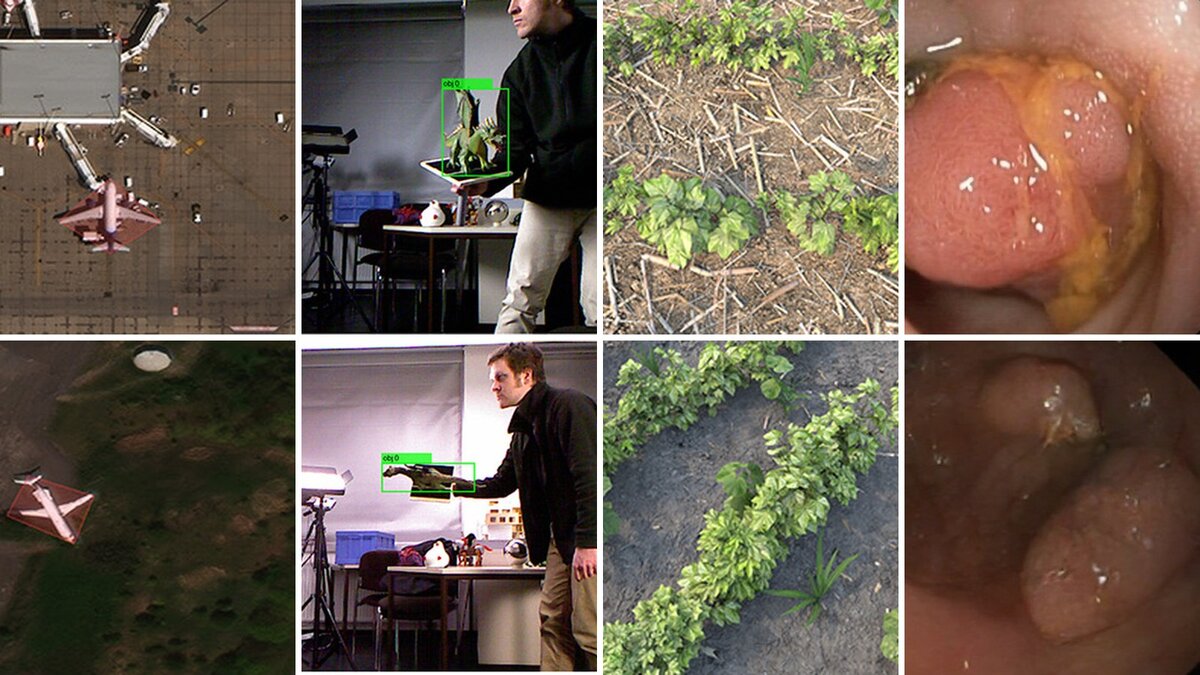
Our paper Auditing Metrics for Synthetic Data Utility: A Cross-Domain Study of Appearance and Geometry was accepted to the Evaluations and Datasets Track at WACV 2027.
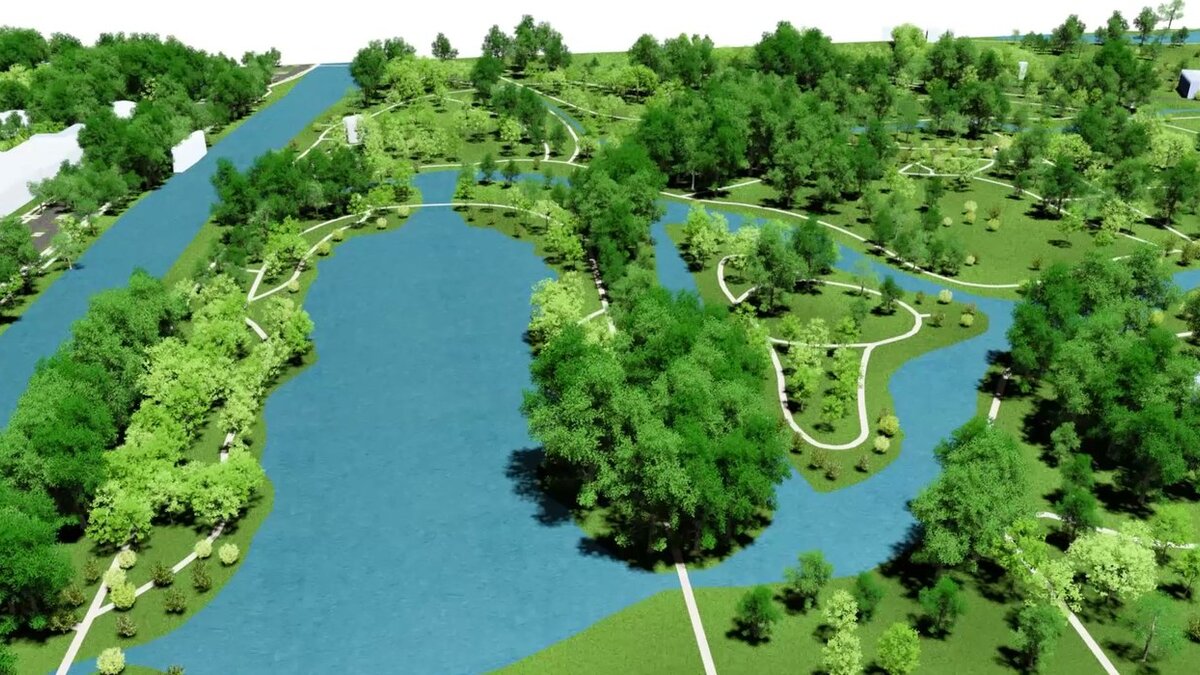
Our paper GreenScapes: Optimized Vegetation Configurations in Cities was accepted to SIGGRAPH Asia 2026.
Aug 05, 2026
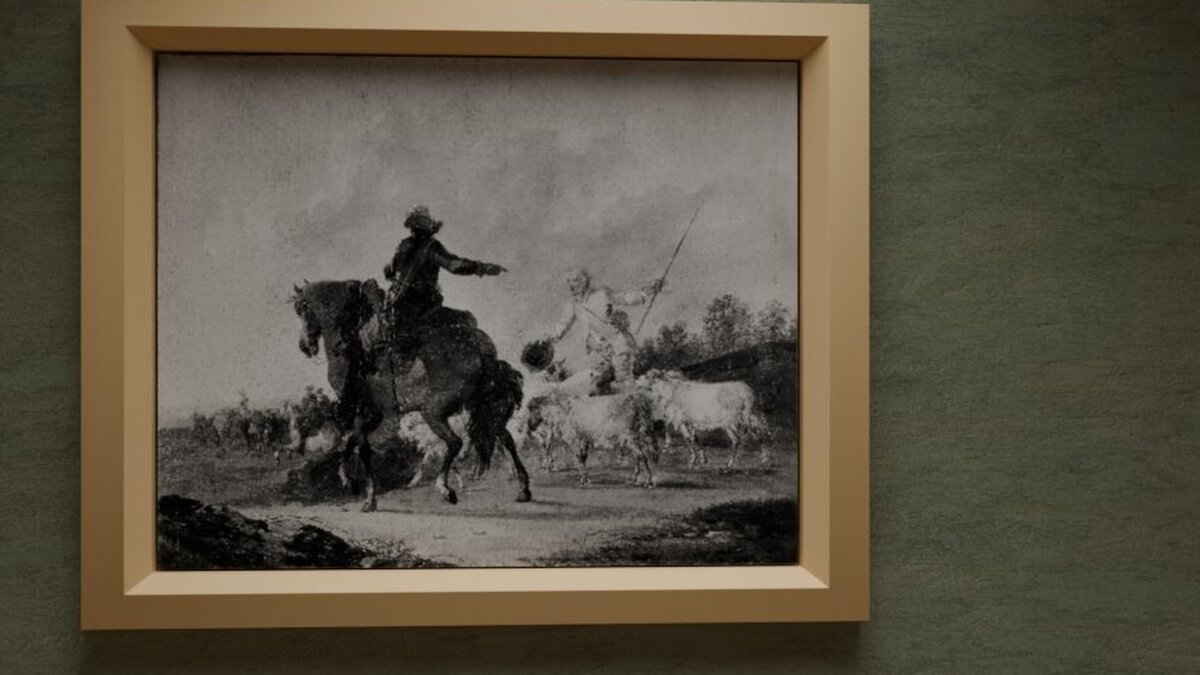
Our paper SynGallery: A Synthetic Gallery of Real Paintings for Instance-Level Artwork Recognition was accepted to the VISART VIII workshop at ECCV 2026.
Image-similarity metrics are widely used to assess synthetic data, yet it remains unclear whether they predict how effectively synthetic training data transfer to real images. We present a common evaluation protocol for appearance- and structure-oriented proxies and apply it to seven synthetic-to-real benchmark families, 21 dataset variants, and 87,880 image-pair comparisons spanning object detection, semantic segmentation, and 6D pose estimation. No standalone metric is consistently strongest: appearance metrics are more informative in settings dominated by rendering, texture, or illumination differences, whereas correspondence-based metrics provide stronger evidence when pose, viewpoint, or spatial structure varies. These results show that the two signal families capture distinct aspects of synthetic-to-real compatibility. As a secondary analysis, we introduce SADGE, a transparent three-parameter interaction between DINOv3 appearance similarity and MASt3R correspondence. On the complete benchmark, SADGE reaches Pearson r = 0.834 and Spearman rho = 0.853, compared with r = 0.585 and 0.545 for the strongest appearance- and structure-oriented standalone metrics. With the component pair fixed, repeated variant-level calibration yields median held-out correlations from 0.611 to 0.755, surpassing the strongest unfitted metric from five calibration variants onward. Under exhaustive family-disjoint calibration, median held-out correlation rises from 0.529 with two calibration families to 0.841 with five, although the wider dispersion and negative tail reveal substantial sensitivity to calibration composition. Together, the benchmark and held-out analyses support evaluating appearance and structural compatibility jointly, while positioning SADGE as a calibrated training-free diagnostic for downstream validation.
@inproceedings{bartkowiak2027sadge,title={Auditing Metrics for Synthetic Data Utility: A Cross-Domain Study of Appearance and Geometry},author={Bartkowiak, Patryk and Michels, Dominik L. and Pirk, S{\"o}ren and Palubicki, Wojtek},booktitle={Proceedings of the IEEE/CVF Winter Conference on Applications of Computer Vision (WACV)},month=jan,year={2027},}
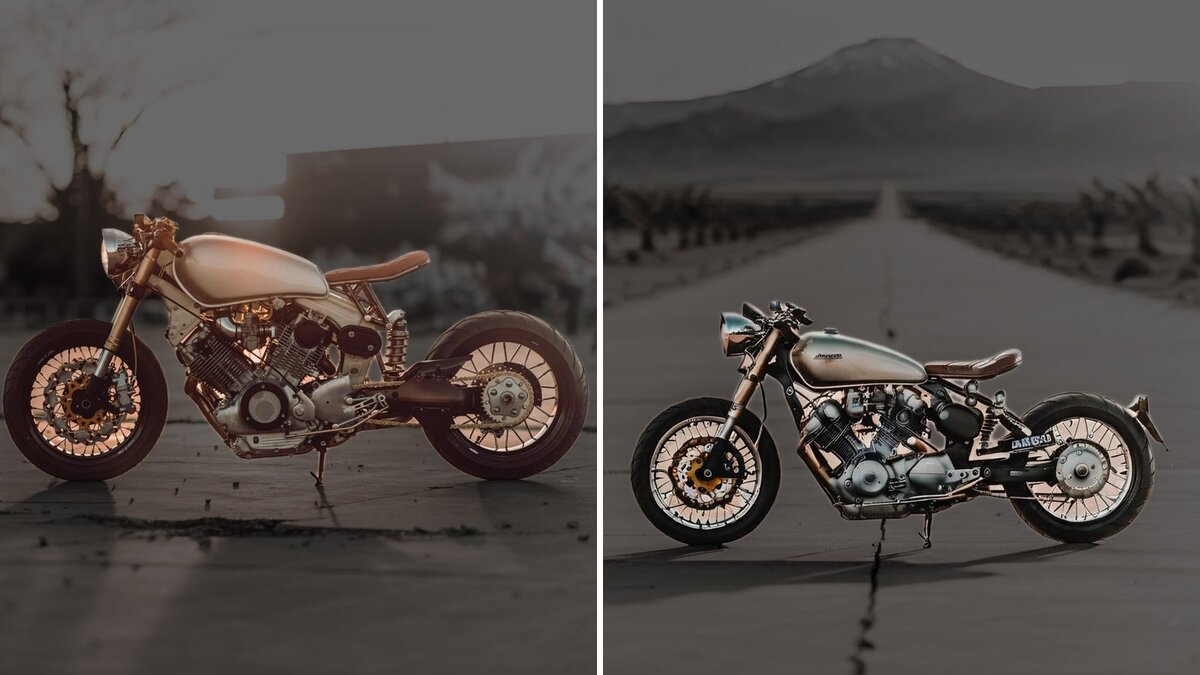
Evaluating single-concept personalization in text-to-image diffusion has seen two categories of quantitative metrics: Concept Preservation (CP) measures identity fidelity to a reference while Prompt Following (PF) measures whether the generated scene matches the prompt. Personalization papers have commonly computed these signals using three separate backbones: CLIP-I and DINO for CP, CLIP-T for PF. In this paper, we show that existing metrics fall short of correlating with human perception because they attend to the image as a whole, instead of distinguishing the concept subject from the background. This distinction is important from a human perception point of view as the concept subject in the output image should be very similar to the input concept (CP), whereas the output background should adhere closely to the text prompt (PF). To improve personalization evaluation in this way, we introduce MaSC, a unified metric that attends to CP and PF by differentiating concept subject regions. Specifically, given an externally provided foreground concept mask, MaSC computes the CP and PF scores from a single forward pass of a frozen SigLIP2 encoder per image. On DreamBench++ human ratings, MaSC reaches Krippendorff alpha = +0.471 on CP - beating every non-LLM baseline tested (DINOv3, DreamSim, AM-RADIO, DIFT-SDXL, DINO-I, CLIP-I) and GPT-4V, while sitting within 0.028 alpha of GPT-4o. To distinguish human perception bias we also evaluate our method, as well as common SOTA baselines, on ORIDa, a real-photo benchmark of identity preservation across physical environments. In this experiment MaSC reaches AUC = 0.992 almost perfectly identifying concept subjects. The PF score, obtained by MaSC without a second encoder forward pass, beats the CLIP-T baseline shipped with DreamBench++. In summary, our comprehensive evaluations demonstrate that MaSC establishes a new state-of-the-art for non-LLM concept preservation, while providing an efficient, unified standard for personalization evaluation. We release MaSC as a pip-installable Python package, alongside independent reproductions of every comparator’s published numbers.
@inproceedings{bartkowiak2026masc,title={MaSC: A Masked Similarity Metric for Evaluating Concept-Driven Generation},author={Bartkowiak, Patryk and Petersen, Lennart and Kotrys, Bartosz and Michels, Dominik L. and Pirk, S{\"o}ren and Palubicki, Wojtek},booktitle={Advances in Neural Information Processing Systems},month=dec,year={2026},}
Vegetation plays a central role in cities, serving functional roles such as balancing shade and sky exposure, shaping the microclimate, carbon sequestration, and providing acoustic screening. Furthermore, aesthetic choices in landscape styles (formal, modernist, picturesque) are important for citizens’ well-being and should be considered in the design of urban landscapes. In this paper, we present a novel method for placing vegetation, ranging from shrubs to large trees, in 3D urban scenes. Our method uses individual lots as input and employs a conditioned Vision-Language Model (VLM) to generate a top-down rendering of vegetation, placing large trees, small trees, and shrubs on lawn areas. This rendering is then converted into a 3D scene by detecting individual plants and selecting appropriate 3D assets. To refine the proposed configurations, we define an optimization loop that keeps the VLM-generated positions fixed after a deterministic feasibility repair and uses CMA-ES to optimize per-instance scale transformations along with discrete vegetation asset substitutions. To define the objective function for the optimization, we evaluate the generated 3D scenes with efficient surrogate models of shade and path-based acoustic exposure. Furthermore, we render in-scene views at each optimization step to compute view-dependent perceptual descriptors, enabling the generation of both aesthetic and functional vegetation layouts for urban scenes.
@misc{bartkowiak2026greenscapesoptimizedvegetationconfigurations,title={Greenscapes: Optimized Vegetation Configurations in Cities},author={Bartkowiak, Patryk and Marlewski, Marcin and W{\'o}jcik, Pawe{\l} and Lee, Jae Joong and Michels, Dominik L. and Benes, Bedrich and Pirk, S{\"o}ren and Pa{\l}ubicki, Wojciech},month=dec,year={2026},eprint={2610.40007},archiveprefix={arXiv},primaryclass={cs.GR},url={https://arxiv.org/abs/2610.40007},}
Instance-level artwork recognition requires matching a handheld visitor photograph to a specific work in a large museum collection. This is difficult because museum datasets typically provide clean catalog images for training, while test queries are captured under oblique viewpoints, gallery lighting, reflections, frames, and other scene-level variations. We present SynGallery, a synthetic gallery dataset for artwork retrieval that addresses this gap without collecting additional visitor photographs. Starting from catalog images of real paintings, we place each artwork into a procedurally generated 3D gallery scene and render it from multiple viewpoints under varied geometric and appearance conditions, while preserving the exact identity of the original work. The resulting dataset contains 24,490 rendered views of 4,898 paintings from the Met benchmark. We show that these synthetic views provide a stronger training signal than the corresponding studio photographs. At a matched image budget, training only on SynGallery improves closed-world painting recognition from 67.18 to 73.47 GAP-. When added to the full Met training set, SynGallery improves the published benchmark protocol from 35.97 to 38.48 GAP, without changing the retrieval architecture or adding real visitor photos. Ablations show that the gain comes primarily from geometric viewpoint variation rather than low-level photographic realism: simulated blur, sensor noise, and compression consistently reduce performance.
@inproceedings{bartkowiak2026syngallery,title={SynGallery: A Synthetic Gallery of Real Paintings for Instance-Level Artwork Recognition},author={Bartkowiak, Patryk and Markil, Jakub and Kotrys, Bartosz and Michels, Dominik L. and Pirk, S{\"o}ren and Palubicki, Wojtek},booktitle={Vision for Art and Culture (VISART VIII) Workshop at the European Conference on Computer Vision},month=sep,year={2026},address={Malm{\"o}, Sweden},}